Watercolor Floral Element: Design Versatility
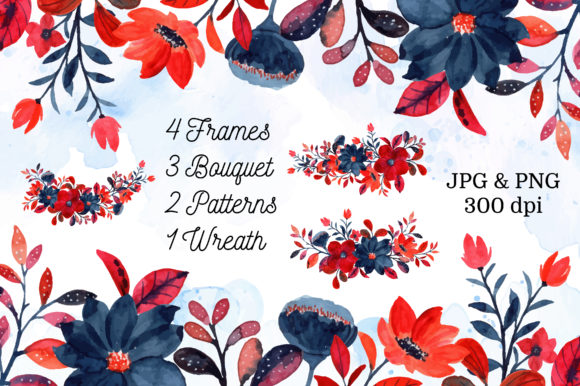
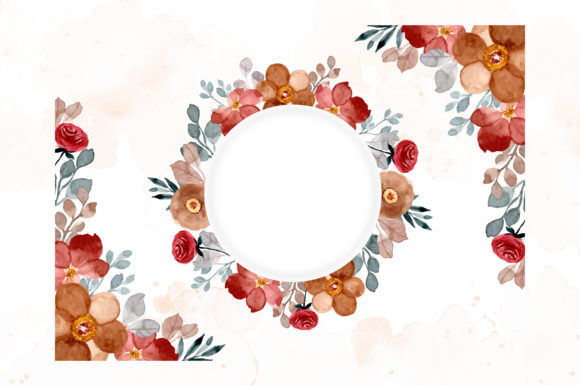
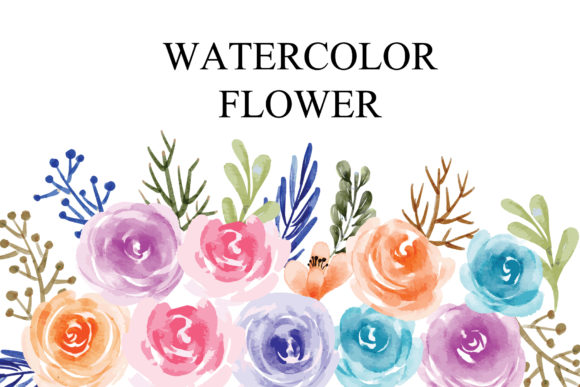
There is a distinct warmth that hand-painted botanical illustrations bring to digital design, a quality that vector shapes often struggle to replicate on their own. The Watercolor Floral Element collection bridges this gap by offering high-resolution, organic textures that feel authentically crafted rather than digitally manufactured. For designers and content creators working across branding, publishing, and packaging, these assets serve as more than mere decoration; they are foundational components for establishing mood and visual identity. Unlike standard clip art, a premium set of watercolor florals retains the subtle bleeding edges, paper grain, and pigment variation that characterize traditional media. This authenticity is crucial when your goal is to evoke feelings of nostalgia, luxury, or natural wellness in a commercial project.
The technical specifications of these files matter just as much as their aesthetic appeal. Accessing both EPS 10 and AI formats at 300 DPI ensures that whether you are designing a business card or a large-format banner, the integrity of the brushwork remains intact. The EPS 10 compatibility is particularly significant for professionals who may need to open files in older versions of Adobe Illustrator or alternative vector software like CorelDRAW or Affinity Designer. Meanwhile, the native AI file preserves layers and editing capabilities for those using current Creative Cloud suites. This dual-format approach respects the diverse workflows of modern creative professionals, ensuring that the transition from concept to final print production is seamless and free of technical friction.
Elevating Brand Identity and Editorial Layouts
Visual hierarchy is often discussed in terms of typography, but illustrative elements play an equally vital role in guiding the viewer’s eye. When integrating Watercolor Floral Element assets into editorial design or web layouts, consider them as active participants in the composition rather than passive background noise. A strategically placed peony or eucalyptus branch can frame a headline, create negative space for text overlay, or lead the reader from one section to the next. In magazine spreads and blog headers, these organic forms soften the rigid grid structures typical of modern typography, creating a balanced tension between structure and fluidity.
For brand strategists and marketers, consistency is key to recognition. Using a cohesive set of floral elements helps build a proprietary visual language that distinguishes a brand from competitors relying on generic stock imagery. Whether applied to product packaging, social media graphics, or stationery suites, these elements reinforce a narrative of artisanal quality and attention to detail. The soft, translucent nature of watercolor allows these graphics to layer beautifully over colored backgrounds or photographs without overwhelming the primary message. This versatility makes them ideal for industries where trust and aesthetics intersect, such as skincare, boutique hospitality, wedding planning, and sustainable fashion.
Pairing Botanicals with Modern Typography
The success of a design often hinges on how well illustrative elements interact with type. Watercolor florals possess an inherent informality and romance that requires careful typographic counterbalancing. When selecting a font pairing, consider the specific personality of the floral element. Delicate, airy washes pair exceptionally well with high-contrast serif fonts or elegant script fonts, enhancing a sense of classic sophistication. Conversely, bold, saturated botanical illustrations can ground a minimalist sans serif typeface, adding necessary texture to an otherwise stark layout.
Avoid the common pitfall of matching a handwritten font with intricate florals, as this can result in a cluttered, illegible mess where neither element stands out. Instead, let the Watercolor Floral Element provide the "handmade" cue while allowing a clean display font or body copy to handle communication. This separation of duties ensures readability remains paramount. In logo design, for instance, the floral might act as an icon or accent mark beside a strong wordmark, rather than intertwining directly with the letterforms. Testing these combinations at various sizes is essential; what looks harmonious on a desktop monitor may become muddy when scaled down for a mobile screen or embroidered onto fabric.
Technical Considerations for Print and Digital Production
Working with raster-based watercolor textures inside vector environments requires an understanding of resolution and color management. While the provided 300 DPI specification is industry standard for print, digital designers must be mindful of file size optimization for web use. Exporting flattened PNGs or optimized JPEGs from the master AI file allows you to maintain visual fidelity while keeping page load times reasonable. For print projects, always verify the color profile. Watercolor scans are typically RGB due to the scanning process, but commercial printing requires CMYK. Converting these files early in the design phase prevents unexpected color shifts, particularly in vibrant greens and soft pinks which are notorious for dulling during conversion.
The inclusion of EPS 10 format offers a safety net for cross-platform collaboration. If you are sending proofs to a client or working with a print vendor who uses legacy systems, this format guarantees compatibility without losing image quality. However, keep in mind that EPS files do not support transparency in the same way native AI files do. If your design relies heavily on blending modes or masking effects within Illustrator, stick to the AI format for editing and only export to EPS for final delivery or archival purposes. Understanding these nuances prevents production delays and ensures the final output matches your creative vision.
- Resolution Check: Always verify effective PPI after scaling. Enlarging a 300 DPI image by 200% reduces effective resolution to 150 DPI, causing pixelation in print.
- Color Space: Soft proof your designs in CMYK before finalizing to catch gamut warnings specific to watercolor gradients.
- Layer Management: Keep floral elements on separate layers above text and backgrounds to allow for non-destructive editing and easy isolation.
- Licensing Review: Confirm commercial usage rights, especially for products intended for resale or large-scale distribution.
Strategic Application Across Creative Projects
Beyond traditional graphic design, Watercolor Floral Element assets have found a home in the creator economy and small business sector. Crafters and hobbyists utilize these high-quality files for sublimation printing, Cricut projects, and digital planner stickers. The 300 DPI resolution is critical here; low-resolution sources result in jagged edges and banding when printed on physical media. For entrepreneurs selling digital templates or physical goods, investing in premium, commercially licensed assets protects against copyright issues and elevates the perceived value of their offerings. Customers can instinctively tell the difference between a free, low-res graphic and a professionally digitized painting.
In the realm of content creation, these elements serve as powerful engagement tools. Social media algorithms favor original, visually rich content. Using unique watercolor compositions as story backgrounds, post borders, or highlight covers creates a recognizable feed aesthetic that encourages followers to pause and engage. Unlike trending templates that everyone uses, custom arrangements of floral elements allow for endless variation while maintaining brand cohesion. This balance of novelty and familiarity is exactly what builds long-term audience connection.
Ultimately, the value of a resource like Watercolor Floral Element lies in its ability to humanize digital spaces. In an era of AI-generated perfection and sterile minimalism, the imperfections of hand-painted art resonate deeply with audiences seeking authenticity. By leveraging the technical robustness of EPS 10 and AI files alongside thoughtful design principles, creatives can harness this resonance to build brands, publications, and products that feel genuinely alive. Whether you are designing a wedding invitation suite or a national ad campaign, treating these elements with the same respect as your typography will yield results that are both beautiful and strategically effective.