Evaluating Digital Clipart Floral Watercolor Part.4 for Design Projects
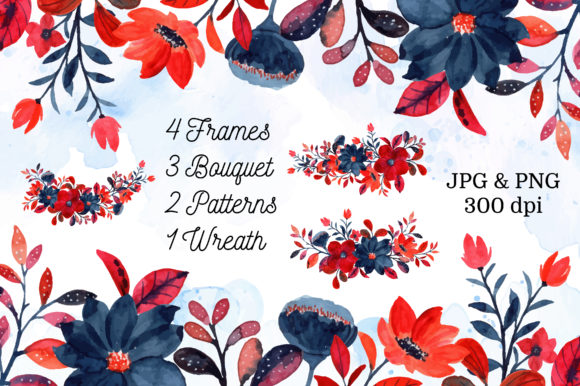
Selecting the right visual assets is a critical step in any creative project, particularly when balancing aesthetic quality with technical requirements. Digital Clipart Floral Watercolor Part.4 represents a specific collection of botanical illustrations designed for versatility across print and digital mediums. For designers, event planners, and DIY enthusiasts, understanding the practical applications and limitations of this asset pack is essential before integration into a workflow. This evaluation explores the composition, utility, and decision-making factors associated with these watercolor floral elements to determine their alignment with specific project goals.
Composition and Technical Specifications
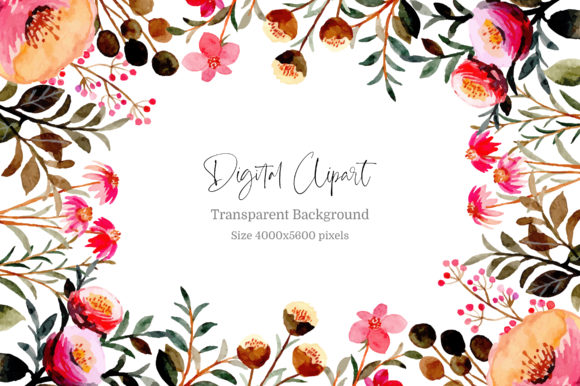
Digital Clipart Floral Watercolor Part.4 is structured as a comprehensive bundle rather than a single image, providing a cohesive ecosystem of matching assets. The collection includes 20 high-resolution files at 300 DPI, ensuring suitability for professional printing. Understanding the specific breakdown of these files helps users assess whether the variety meets their scope of work.
- Frames: The pack contains four watercolor floral clipart frames in two orientations (4000×5600 pixels and 5600×4000 pixels). These dimensions accommodate standard invitation sizes and certificate layouts without requiring significant upscaling.
- Wreaths: One circular wreath (4000×4000 pixels) serves as a central focal point for logos, monograms, or table numbers.
- Bouquets: Three separate bouquet arrangements (4200×2700 pixels) offer asymmetrical options for corner placements or standalone decorative elements.
- Seamless Patterns: Two repeating patterns (4000×4000 pixels) provide background textures for fabric, wrapping paper, or website headers.
All elements are provided in both JPG and PNG formats with transparent backgrounds. The inclusion of transparent PNGs is a significant technical advantage, allowing for layering over colored backgrounds or photographs without the need for manual masking or background removal. The 300 DPI resolution is the industry standard for offset and digital printing, preventing pixelation in physical outputs like wedding stationery or textile prints.
Primary Use Cases and Applications
The versatility of Digital Clipart Floral Watercolor Part.4 extends beyond simple decoration. The assets are engineered for specific functional roles in design composition. Wedding invitations remain the most common application, where the frames provide structure for typography and the bouquets add organic softness to rigid layouts. However, the seamless patterns significantly expand the utility of the pack. Unlike standalone illustrations, seamless patterns allow for continuous coverage on large surfaces, making them viable for fabric design, custom gift wrap, and scrapbooking paper.
For greeting card creators, the combination of wreaths and separate bouquets allows for modular design. A user can utilize the wreath for a holiday card front and repurpose the individual bouquets for thank-you notes, maintaining brand or thematic consistency across different products. In digital contexts, the high pixel count allows these assets to be cropped for social media templates or web banners while retaining sufficient clarity for screen display.
Benefits and Strategic Advantages
The primary benefit of this specific collection is stylistic cohesion. Sourcing individual watercolor elements from different artists often results in mismatched brush strokes, color palettes, and lighting conditions. Digital Clipart Floral Watercolor Part.4 ensures that the frame, wreath, bouquet, and pattern share an identical artistic hand. This uniformity reduces the time spent on color grading or post-processing adjustments to make disparate elements look like they belong together.
Additionally, the pre-arranged nature of the frames and wreaths offers a balance between customization and convenience. While fully custom illustration provides total control, it requires significant budget and time. Conversely, generic stock photos often lack flexibility. This clipart occupies a middle ground: the compositions are fixed, but the transparency and separation of elements allow designers to rearrange, scale, and combine them to create unique layouts without starting from scratch. The 300 DPI specification also future-proofs the assets; files created for a small invitation today can be repurposed for a large-format welcome sign tomorrow without degradation.
Tradeoffs and Limitations
Despite the advantages, objective evaluation requires acknowledging limitations. As raster-based artwork, these files do not possess the infinite scalability of vector graphics. While 4000–5600 pixels is substantial, enlarging these assets beyond their native resolution for billboard-sized signage or massive trade show displays will result in quality loss. Users requiring extreme scalability should consider vector alternatives or commission custom high-resolution scans.
Another consideration is the fixed color palette. Watercolor clipart typically comes in baked-in colors. If a project requires a specific Pantone match or a drastically different hue scheme, recoloring transparent watercolor PNGs can be challenging and may result in artifacts or loss of texture depth. While blending modes and adjustment layers in software like Photoshop can shift tones, they cannot perfectly replicate a custom-painted alternative. Furthermore, because this is "Part.4" of a series, users must verify that it aligns with previous parts if they intend to mix collections, or ensure it stands sufficiently on its own if used independently.
Decision-Making Framework: When to Choose This Asset
Determining whether Digital Clipart Floral Watercolor Part.4 is the correct investment depends on specific project parameters. This collection is a strong fit for users who require immediate access to high-quality, cohesive botanical themes for mid-to-large format printing. It is particularly valuable for:
- Stationery Designers: Who need consistent branding across suites including invites, menus, and place cards.
- Print-on-Demand Sellers: Creating products like journals, mugs, or textiles where seamless patterns and distinct focal points are necessary.
- Event Planners: Producing in-house signage and decor where budget constraints preclude hiring a bespoke illustrator.
Conversely, alternatives may be worth considering in specific scenarios. If the project demands exclusive commercial rights with no possibility of other users having the same imagery, custom illustration is the only viable path. If the design requires frequent resizing to arbitrary dimensions or complex color manipulation, vector art or AI-generated customizable sets might offer greater flexibility. Additionally, if the project is purely digital and low-resolution (e.g., email newsletters), the file sizes and cost associated with 300 DPI print-ready assets may be unnecessary overhead.
Practical Implementation Insights
To maximize the value of this clipart pack, users should organize files by function immediately upon download. Separating seamless patterns from standalone elements streamlines the design process. When working with the transparent PNGs, utilizing layer masks rather than erasers preserves the original asset integrity for future projects. For the seamless patterns, testing the repeat tile in the intended output size before finalizing the design prevents visible seams or scaling issues in production.
Ultimately, Digital Clipart Floral Watercolor Part.4 serves as a robust foundational toolkit for botanical design. By weighing the technical specifications against project requirements and acknowledging the inherent tradeoffs of raster clipart, users can make an informed decision that balances efficiency, aesthetics, and professional standards. The collection offers significant utility for those whose needs align with its specific format, resolution, and stylistic approach.