Evaluating the Cute Cat with Pink Floral Wreath Design for Print and Digital Projects
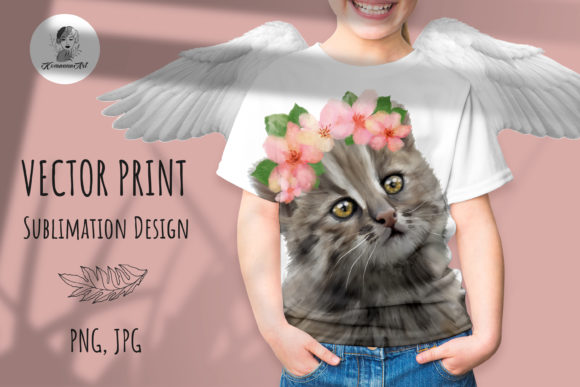
When selecting visual assets for apparel, pet shop branding, or personalized gifts, the distinction between generic clip art and specialized sublimation designs significantly impacts the final product's perceived value. The Cute Cat with Pink Floral Wreath illustration represents a specific niche within digital design resources: hand-painted, realistic pet portraiture optimized for high-resolution printing. Unlike vector-based graphics that rely on mathematical lines, this asset utilizes rasterized brushwork to capture texture, light reflection in golden eyes, and the organic imperfections of floral elements. For creators and business owners comparing options for t-shirts, pillows, or posters, understanding the technical and aesthetic specifications of this kit is essential for determining if it aligns with production requirements and brand identity.
Technical Specifications and Sublimation Compatibility
The primary differentiator for any print-ready asset is its resolution and color profile. This design kit provides files at 2500 x 2500 pixels with a density of 300 DPI (dots per inch). In practical terms, this specification dictates the maximum physical print size without quality degradation. At 300 DPI, a 2500-pixel dimension translates to approximately 8.3 inches by 8.3 inches of crisp, professional-grade output. This makes the Cute Cat with Pink Floral Wreath ideal for standard apparel placements, such as center-chest t-shirt prints, tote bags, and throw pillows. However, users planning large-format signage or full-bleed bedding may find this resolution limiting compared to vector alternatives or ultra-high-resolution scans exceeding 4000 pixels.
The inclusion of separate PNG files with transparent backgrounds is a critical feature for sublimation and direct-to-garment (DTG) workflows. Transparency eliminates the need for manual masking, which can often result in jagged edges or halos around complex fur textures. When comparing this kit to flattened JPG-only alternatives, the PNG format offers superior versatility for layering over colored fabrics or integrating into composite designs. The kit also includes JPG versions, which serve as useful references or proofing files but are generally less suitable for production due to their solid white backgrounds and potential compression artifacts.
File Format Tradeoffs: PNG vs. Vector vs. AI Generation
Creators often weigh hand-painted raster illustrations against other common asset categories. Each format presents distinct advantages and limitations depending on the end use:
- Hand-Painted Raster (This Kit): Offers authentic texture, emotional warmth, and unique artistic imperfections. Best for products where "handmade" or "artisanal" aesthetics drive sales. Limited scalability compared to vectors.
- Vector Graphics: Infinitely scalable and editable. Ideal for logos or typography-heavy designs. Often lacks the organic depth and fur realism found in hand-painted kitten illustrations.
- AI-Generated Imagery: Rapidly produced and highly variable. Can struggle with anatomical accuracy in paws/eyes and consistent style across a collection. Lacks the intentional composition of human-created art like KomannaArt’s work.
- Stock Photography: Photorealistic but difficult to isolate cleanly for apparel. Fur edges against white backgrounds often require extensive editing, whereas pre-masked PNGs save significant production time.
For pet shops or brands emphasizing craftsmanship, the hand-painted nature of the Cute Cat with Pink Floral Wreath typically outperforms sterile vectors or inconsistent AI outputs. However, if the project requires frequent resizing or color separation for screen printing, a vector alternative might be more operationally efficient despite lacking the same illustrative charm.
Aesthetic Fit and Audience Resonance
Beyond technical specs, the decision to use this specific illustration hinges on stylistic alignment. The combination of a realistic kitten with golden eyes and a soft pink floral wreath targets a specific demographic intersection: pet enthusiasts who appreciate cottagecore, vintage, or romantic aesthetics. This differs markedly from minimalist line-art cats or cartoonish caricatures. When evaluating whether this design fits your catalog, consider the following contextual factors:
Best-Fit Scenarios
- Boutique Pet Apparel: The detailed fur rendering and floral accents photograph well on social media and translate effectively to premium cotton or poly-blend fabrics.
- Seasonal Merchandise: Pink florals naturally align with spring collections, Mother’s Day promotions, or Valentine’s themes without requiring seasonal text overlays.
- Personalized Gifts: The isolated composition leaves negative space for adding custom names or dates, making it functional for print-on-demand personalization services.
- Pet Shop Signage & Packaging: The friendly, approachable expression works well for welcome signs, thank-you cards, or packaging stickers where building emotional connection matters more than bold readability at distance.
Situations Requiring Alternatives
While versatile, the Cute Cat with Pink Floral Wreath is not universally optimal. Its soft color palette and intricate details may reproduce poorly on dark garments without an underbase layer, increasing production complexity. Brands targeting masculine demographics or modern industrial aesthetics may find the floral wreath incongruent with their visual identity. Additionally, because this is a raster illustration, it cannot be easily recolored in vector software; adjusting the pink tones to match a specific brand hex code requires pixel-level editing in Photoshop or similar tools, which adds workflow friction compared to swapping fill colors in Illustrator.
Licensing, Usability, and Practical Considerations
When comparing digital design kits, usability extends beyond the image itself to include file organization and licensing clarity. This kit’s structure—three JPG previews plus individual transparent PNGs—reflects a user-centered approach that reduces asset management overhead. Many competing marketplaces bundle dozens of variations in compressed archives with unclear naming conventions, forcing buyers to open multiple files to locate the correct version. Here, the separation of formats allows immediate deployment of the PNG for production while retaining JPGs for mockups or client approvals.
However, prospective users should always verify licensing terms relative to their commercial scale. While the description indicates suitability for t-shirts, apparel, and posters, some digital art licenses restrict mass production (e.g., over 500 units) or prohibit use in digital templates for resale. Comparing this kit against others requires checking whether the license covers your intended volume and distribution channels. A slightly higher-priced asset with broader commercial rights often delivers better long-term ROI than a cheaper option with restrictive terms that necessitate future upgrades.
Color Management for Accurate Reproduction
Realistic illustrations with subtle gradients, like golden eyes and pink petals, demand careful color management. Screen displays emit light (RGB), while printers absorb ink (CMYK). Without proper conversion, vibrant pinks can shift toward magenta or dull rose in print. Users comparing this kit to pre-converted CMYK assets should note that RGB source files offer greater editing flexibility but require proactive color profiling. Testing a single print sample before bulk production is non-negotiable for maintaining the illustration’s intended warmth and luminosity across different substrates.
Making an Informed Selection
Choosing the right design resource involves balancing artistic appeal, technical adequacy, and operational fit. The Cute Cat with Pink Floral Wreath excels as a mid-sized, high-detail asset for creators prioritizing authenticity and emotional resonance in pet-related merchandise. Its 300 DPI resolution and transparent PNG format address core production needs for apparel and accessories up to 8 inches square. Where it falls short—in infinite scalability or easy recoloring—alternative formats may serve better for large signage or highly branded corporate materials.
Ultimately, the decision should stem from matching the asset’s inherent strengths to your project’s specific constraints. If your audience values handcrafted aesthetics and your production workflow supports raster-based sublimation or DTG printing, this illustration offers a compelling blend of quality and convenience. For projects demanding bold simplicity, massive scale, or strict brand-color adherence, exploring vector or typographic alternatives remains prudent. By evaluating these tradeoffs objectively, creators can select resources that enhance both product quality and operational efficiency without compromising artistic integrity.